Explore 2027 luxury custom home trends in the Hamptons, from natural materials and wellness spaces to smart technology and coastal construction.

Discover essential questions, expert advice, and insights to guide your home decisions.


Luxury home design in the Hamptons is evolving as homeowners plan for 2027. From natural materials and wellness spaces to smart technology and indoor-outdoor living, modern luxury homes are focusing on comfort, functionality, and timeless design.
Across Southampton, East Hampton, and the surrounding East End, these trends are shaping new construction and high-end renovations. If you're considering custom home construction in the Hamptons, explore four key luxury home trends for 2027 and how they can influence your next project.

One of the most noticeable changes in luxury residential design is the move away from cold, overly minimal interiors toward warmer, more welcoming spaces. Hamptons homeowners are increasingly interested in homes that feel refined without appearing overly formal. Natural materials, architectural details, and carefully selected finishes help create this balance. Instead of relying on decorative trends that may quickly become outdated, the emphasis is shifting toward quality construction and craftsmanship that gives each property its own identity.
For homeowners planning a new build or updating an existing residence, this approach begins with thoughtful material selection and continues through every construction detail. SRP Builders' renovation and interior work services support the kind of custom improvements that can transform both the appearance and functionality of a high-end home.
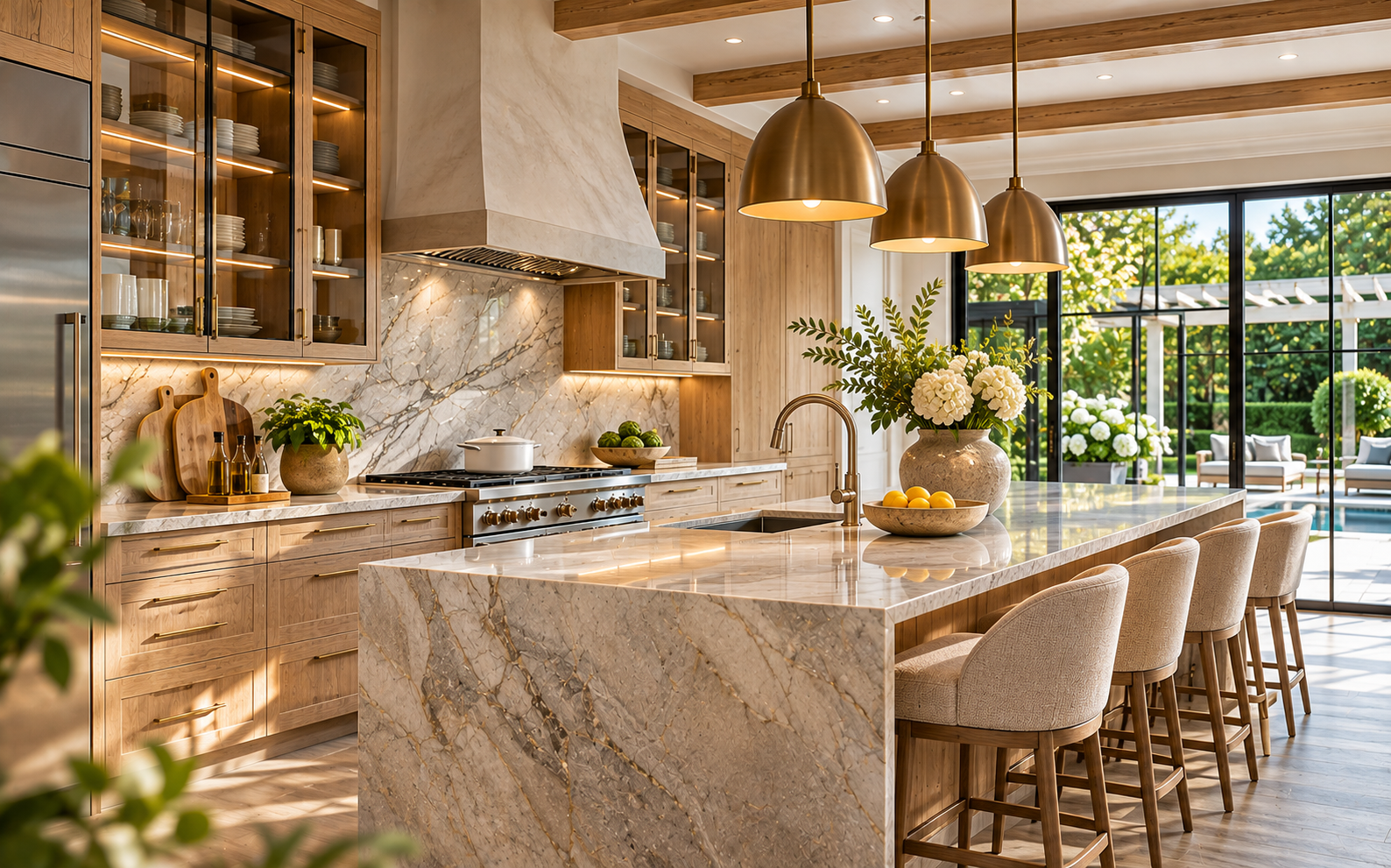
Natural materials are becoming central to luxury home design because they provide depth, character, and a connection to the surrounding environment. Wide-plank oak flooring, marble countertops, limestone accents, and carefully finished woodwork can create interiors that feel elegant without becoming overly decorative.
In the Hamptons, these materials work particularly well with coastal architecture. Warm wood tones complement natural light, while stone surfaces introduce subtle variation and texture. Homeowners are also paying closer attention to how materials transition between kitchens, bathrooms, living areas, and outdoor spaces.
Three material choices worth considering include:
The important consideration is choosing materials that suit the home's architecture and expected use. Natural stone and wood have different maintenance requirements, so appearance, durability, and long-term care should all influence the final selection.
Custom millwork is another defining feature of high-end residential construction. Rather than relying entirely on standard cabinetry and decorative components, homeowners are incorporating built-in elements designed specifically for their living spaces.
Custom libraries, integrated storage walls, detailed ceiling treatments, and handcrafted cabinetry can make a home feel more cohesive. These features also provide practical benefits by improving organization and making better use of available space.
For example, a custom kitchen may include concealed pantry storage, integrated appliance panels, and cabinetry designed around the homeowner's cooking habits. Living areas can feature built-in shelving or entertainment storage that complements existing architectural proportions.
Quality finish carpentry plays an important role in bringing these details together. Consistent trim profiles, clean transitions, and precise installation can significantly influence the finished appearance of a luxury residence.
Homeowners considering these improvements can explore SRP Builders' completed residential projects for examples of construction and interior craftsmanship.
Not every luxury home project requires starting from the ground up. Many East End properties already have distinctive architectural features, traditional detailing, and established connections to their surroundings.
For these homes, thoughtful renovation can create modern functionality without removing the characteristics that make the property special.
Homeowners may choose to update kitchens, improve natural lighting, introduce custom storage, or reconfigure interior layouts while preserving original architectural elements. Existing woodwork, fireplaces, ceiling details, and exterior features can sometimes be incorporated into the new design.
The key is evaluating what should remain, what requires repair, and which changes will provide the greatest long-term benefit.
This approach is explored further in our article, Renovating a Hamptons Home Without Erasing What Makes It Special, which examines how homeowners can balance modern improvements with architectural character.

Luxury homeowners are increasingly considering how their homes support everyday well-being. Rather than treating wellness as a separate amenity, many upcoming custom home projects are integrating comfort, privacy, relaxation, and healthier indoor environments into the overall design. This trend extends beyond adding a gym or sauna. It influences bedroom layouts, bathrooms, lighting, ventilation, and the relationship between private and shared living spaces.
For Hamptons homeowners planning to spend more time at their properties throughout the year, these choices can make a substantial difference in daily comfort. Whether incorporated into a new residence or introduced through a major renovation, wellness-focused improvements require thoughtful planning and coordination with the home's structure and building systems.
Bathrooms are becoming more than functional spaces. In luxury custom homes, primary bathrooms are increasingly designed to provide a calm, spa-like environment with premium materials, carefully planned lighting, and comfortable layouts.
Popular features include oversized walk-in showers, freestanding soaking tubs, heated floors, and custom vanities. Some homeowners are also exploring steam showers, private saunas, and dedicated relaxation rooms as part of their broader home design.
However, these features involve important construction considerations. Steam rooms require appropriate waterproofing, ventilation, and moisture control. Heated flooring must be coordinated with the floor assembly and electrical or mechanical systems. Larger soaking tubs may also require additional structural and plumbing planning.
By considering these details early, homeowners can avoid introducing expensive modifications after construction has progressed.
A well-designed wellness space should feel like a natural extension of the home rather than an isolated collection of luxury features.
Natural light remains one of the most desirable characteristics of a luxury Hamptons home. Large windows, thoughtfully positioned openings, and bright living areas help connect the interior with the surrounding landscape.
For 2027 projects, the focus is increasingly on balancing this openness with privacy, energy performance, and year-round comfort.
Window placement should consider sunlight, views, glare, and seasonal temperature changes. High-performance glazing and appropriate shading can help homeowners enjoy expansive views without creating uncomfortable interior conditions.
Indoor air quality is also receiving greater attention during the design process. Ventilation systems, filtration options, moisture management, and material selection can all influence the quality of the indoor environment.
When evaluating these features, homeowners should prioritize:
These choices are particularly relevant to properties designed for extended stays or year-round occupancy.
Luxury homes are increasingly expected to support more than one lifestyle. A Hamptons residence may serve as a summer retreat, a remote-work location, an entertaining destination, and eventually a primary residence.
This flexibility is influencing how homeowners approach floor plans and room configurations.
A private office may also serve as a guest bedroom. A secondary living area can accommodate exercise equipment, reading space, or informal entertaining. Larger homes may include dedicated wellness areas, while smaller residences can benefit from multifunctional rooms with integrated storage.
The goal is not necessarily to add more rooms. Instead, homeowners should consider how each space will function throughout different stages of life.
For additional planning considerations, explore How High-End Homes on the East End Are Being Designed for Year-Round Living.
This long-term perspective can be especially valuable when deciding whether to build a new custom residence or renovate an existing property.

The connection between interior spaces and outdoor environments remains one of the defining characteristics of Hamptons residential architecture. As homeowners plan for 2027, this relationship is becoming more intentional. Outdoor areas are being designed as extensions of everyday living spaces, while technology is being integrated into homes in ways that support convenience without disrupting their appearance.
These improvements can influence architectural layouts, structural openings, electrical planning, and overall construction costs. For homeowners considering major custom home builds on Long Island, addressing these requirements early allows outdoor features and smart systems to become part of a coordinated design rather than separate additions.
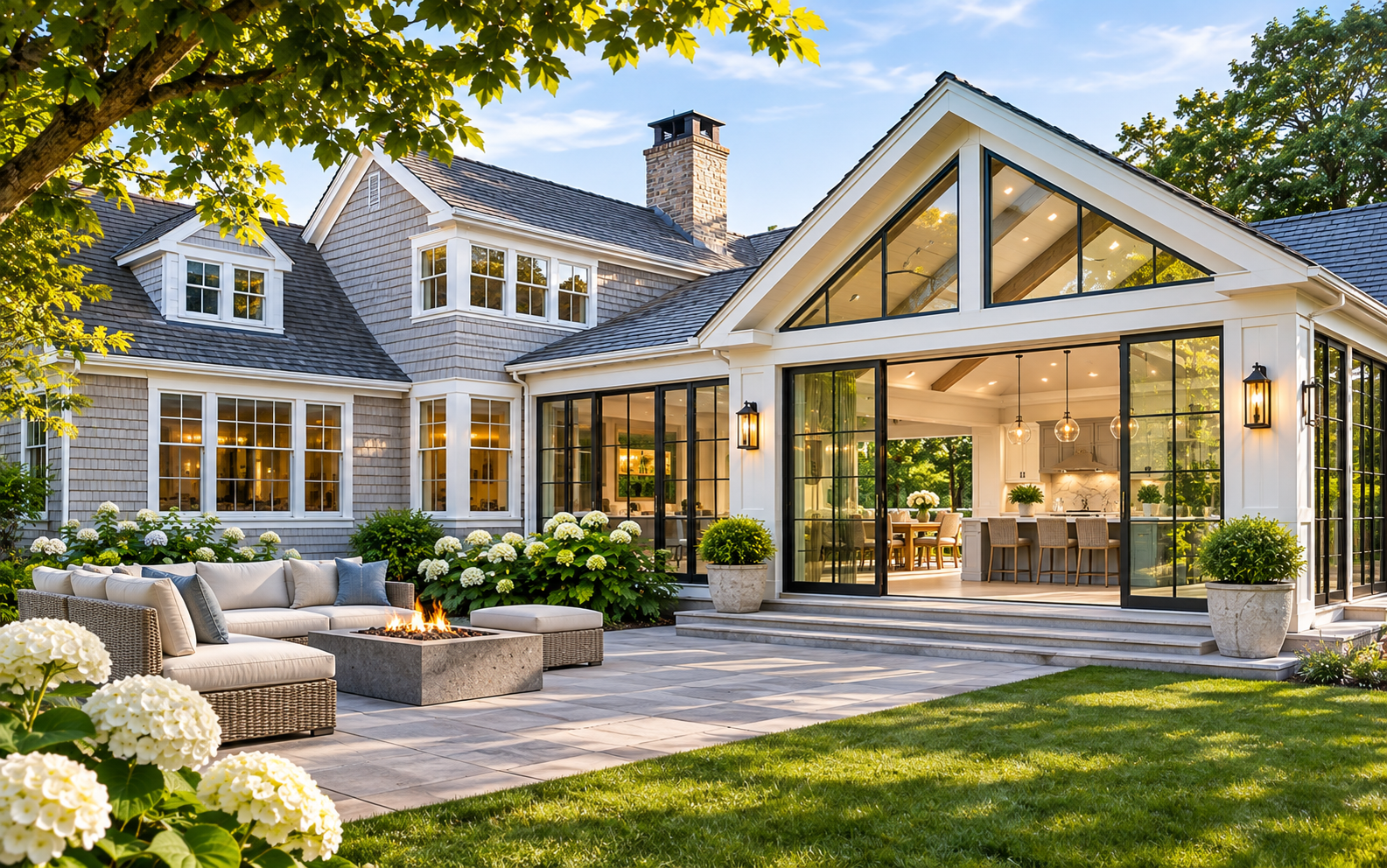
Large glass doors, covered terraces, outdoor kitchens, and connected entertaining areas continue to influence luxury custom home design in the Hamptons.
Homeowners want the freedom to move comfortably between interior living areas and outdoor spaces, especially during warmer months when entertaining often extends to patios, gardens, and poolside areas.
A kitchen that opens directly onto a covered dining terrace can improve circulation during gatherings. A living room with expansive glass doors can bring natural light into the interior while creating a stronger connection to the property.
However, these features require careful architectural and structural planning. Large openings may need engineered support, while exterior thresholds must be detailed to manage water intrusion and weather exposure.
Drainage, insulation, wind exposure, and material durability should also be considered when designing spaces that connect directly to outdoor environments.
Thoughtful construction helps ensure these areas remain functional and visually consistent with the rest of the home.
Outdoor spaces are becoming more sophisticated as homeowners look for ways to extend their living and entertaining areas beyond the traditional patio.
Rather than treating outdoor kitchens, lounges, and dining areas as isolated features, many luxury properties now incorporate them into the overall architectural plan.
Common design priorities include:
In coastal locations, material selection and proper installation are particularly important. Outdoor cabinetry, hardware, fixtures, and finishes need to withstand seasonal temperature changes, moisture, and salt exposure.
Homeowners should also review zoning, setbacks, site coverage, and applicable permit requirements before committing to major outdoor improvements.
Working with professionals experienced in structural and site work can help identify site conditions and construction requirements before these features are finalized.
Luxury home technology is increasingly moving away from visible equipment and complicated control systems toward discreet integration.
Homeowners are interested in lighting, temperature control, security, and automated features that make daily routines easier while preserving clean architectural lines.
For example, motorized window shades can be integrated into ceiling details, lighting controls can support different activities, and climate zones can allow individual rooms to maintain comfortable temperatures.
Some homeowners also plan centralized control systems that connect several features within the residence.
The most useful approach is to identify technology requirements before construction begins. Electrical capacity, wiring routes, network infrastructure, equipment locations, and maintenance access should be coordinated with the architectural plans.
This can reduce the need to open finished walls or modify custom cabinetry later.
SRP Builders' article, Building for the Next 30 Years: Future-Proofing Your Custom Home in the Hamptons, explores how early planning can help a home accommodate changing technology and lifestyle needs.

While architectural trends and luxury amenities attract attention, long-term performance remains a critical consideration for homeowners investing in East End properties. The Hamptons' coastal environment presents construction challenges involving moisture, salt exposure, storms, drainage, and seasonal weather changes. As homeowners plan new builds and major renovations, greater attention is being placed on materials, building systems, and construction methods that can support durability and reduce avoidable maintenance.
For luxury homes expected to serve multiple generations, these practical decisions can be just as important as the visible design. Evaluating the property and planning the construction carefully helps homeowners make informed choices about the long-term performance of their investment.
Coastal environments place additional demands on exterior construction materials. Salt air, moisture, wind-driven rain, and seasonal temperature fluctuations can affect siding, hardware, trim, and exposed structural components.
For this reason, homeowners should consider durability and maintenance requirements alongside appearance when selecting materials.
Depending on the home's location and design, suitable options may include carefully detailed cedar siding, corrosion-resistant hardware, high-performance windows, and exterior finishes selected for coastal exposure.
However, no material performs well without proper installation and maintenance. Flashing, drainage details, fastening methods, ventilation, and moisture control all contribute to the performance of a building's exterior.
These considerations are important for both new construction and existing luxury homes undergoing major renovations.
Homeowners looking to understand the risks of neglected exterior maintenance can also read Why Small Maintenance Problems Become Major Repairs Faster in Coastal Homes.
Energy efficiency is becoming an important consideration in luxury custom home planning, particularly for homeowners interested in long-term operating costs and consistent indoor comfort.
High-performance insulation, improved air sealing, efficient windows, and properly designed heating and cooling systems can contribute to a more comfortable living environment.
Rather than choosing equipment in isolation, homeowners should consider how these systems interact with the overall building envelope.
For example, large expanses of glass may affect heating and cooling requirements. The home's orientation can influence solar heat gain, while insulation and air-sealing decisions affect how efficiently conditioned air is maintained.
Early coordination among builders, architects, and mechanical professionals can help establish a balanced approach.
Energy-efficient features should be evaluated according to the property's design, anticipated use, installation requirements, and available budget.
For homeowners planning a new residence in Southampton or the surrounding Hamptons communities, these decisions are generally easier to coordinate before construction begins rather than after the home is completed.
Some of the most important decisions in luxury home construction happen before the structure begins to take shape.
Soil conditions, existing grading, drainage, excavation requirements, and utility planning can all affect construction methods, project schedules, and long-term performance.
A property with challenging drainage conditions may require additional site planning before foundation work begins. Existing structures may also present conditions that need investigation before a major renovation or addition can proceed.
Homeowners should understand three important planning considerations:
Addressing these matters early can help minimize unexpected changes during construction.
SRP Builders discusses these considerations in The Most Important Part of Your Hamptons Home Might Be Underground, which explains why site preparation and underground infrastructure deserve careful attention.
Long-term property care should also remain part of the conversation. Our maintenance and ongoing services can support homeowners looking to maintain and protect their residential properties after construction or renovation.
The luxury custom home trends shaping 2027 reflect a broader shift toward thoughtful design, lasting craftsmanship, and spaces that support everyday living. Natural materials, custom millwork, wellness-focused interiors, seamless indoor-outdoor connections, and integrated technology are helping define the next generation of high-end homes across the Hamptons.
However, successful luxury construction requires more than selecting attractive features. From architectural planning and material selection to structural preparation and long-term maintenance, every decision should support the home's appearance, functionality, and durability.
For homeowners considering a custom build or major renovation, working with an experienced East End builder can help turn these ideas into practical construction plans.
With over 15 years of experience, SRP Builders specializes in custom homes, high-end renovations, and residential construction across Southampton, the Hamptons, and Long Island's East End. Our team combines local knowledge, skilled craftsmanship, and reliable project management to help homeowners create properties built around their vision.
Explore our custom home and renovation projects to learn more about our work.